Myths, Magic & Real Desert Life: Why Rajasthan’s Camel Herders Don’t Trust Steel Pots

If you Google camel milkright now, you get a boring wall of clinical text. It’s all about insulin-like proteins, gut health, and low-fat dairy alternatives. It reads like a science textbook written by someone who has never actually smelled a camel.

But if you sit down with a group of herders in rural Rajasthan at 5:00 AM, coughing through the smoke of a twig fire while someone reheats a kettle of sweet chai for the third time, nobody is talking about glycemic indexes.

Out here, camel milk is a mix of bizarre village rumors, incredibly stubborn animal personalities, and unwritten rules that would give a modern dairy factory manager a migraine. It’s loud, messy, and funny.

To really understand what's inside abottle of camel milk, you have to look past the urban health trends and listen to the weird stories the herders tell when they're trying to stay warm.

The Shiva Connection And a Very Demanding Pet

If you hang out with the Raika herders in the Pali district, you will eventually hear about how their community started. They don’t see themselves as protectors of the earth they just think they're fulfilling a highly stressful, ancient job description.

Local folklore says that Lord Shiva originally created the camel out of clay because his wife, Parvati, wanted a strange pet to keep her entertained. The problem was that the clay camel was completely wild. It kept running away, knocking over spirit altars, and creating chaos.

Frustrated, Shiva patted his own arm, wiped off some sweat and dust, and molded a human figure. He named him Raika and gave him one clear instruction Your job is to follow this animal wherever it goes and keep it out of trouble.

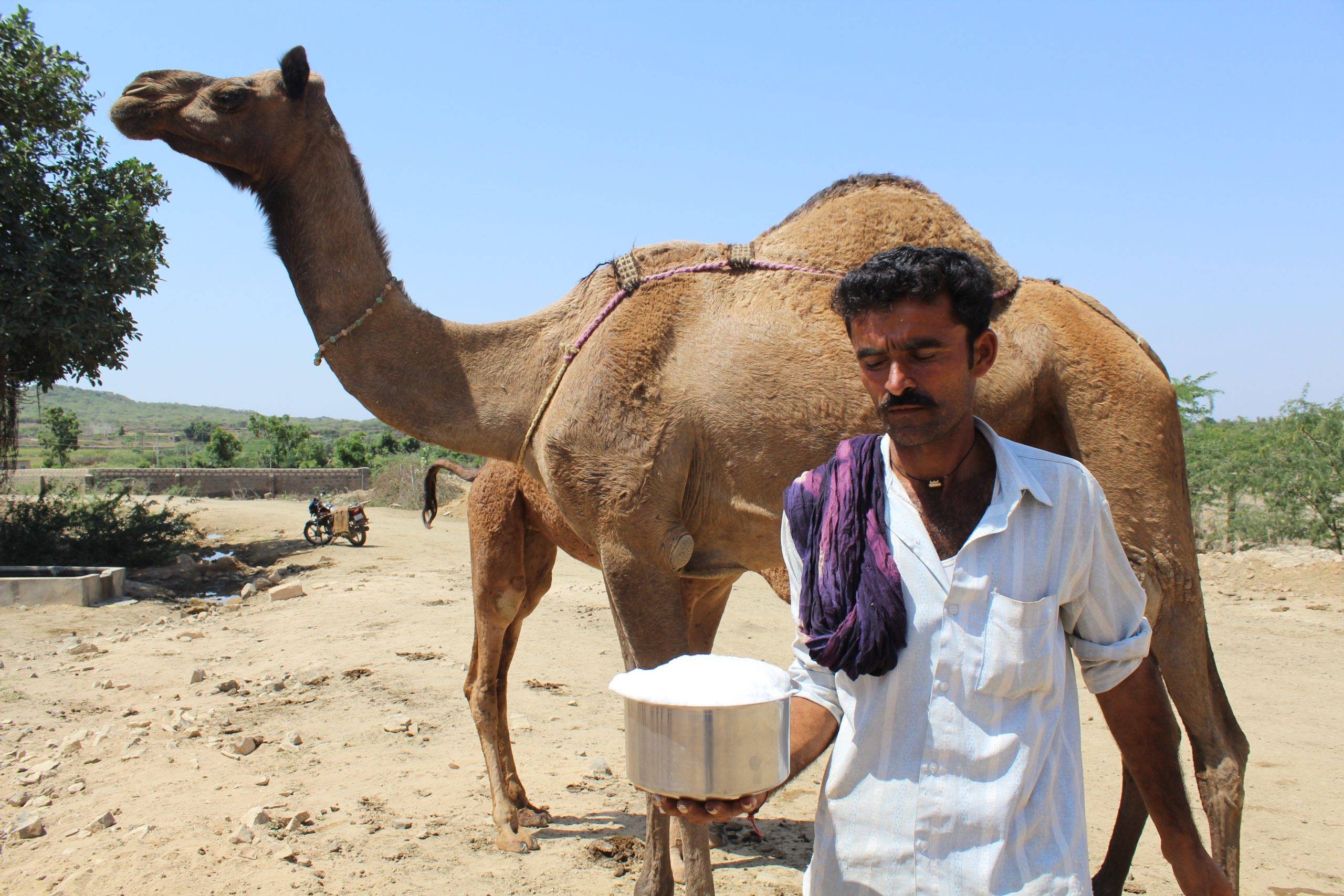
Every camel has a mood, just like a human, says Bhikaram, a sixty-two-year-old herder, while casually ducking as a massive female camel named Lakshmi swings her head toward his turban, trying to chew the loose edge of the cloth.

  • Lakshmi is a snob. If I don't speak to her nicely when I walk up in the morning, she remembers. She’ll wait until the bowl is full of milk and then step on it out of pure spite. You cannot bully a camel. If you treat them like a machine, they simply lock up their udders and give you nothing.

The herders spend all day talking to them, teasing them, and shouting ridiculous nicknames across the scrub. If a herder uses a harsh tone, the whole herd notices, and the vibe changes instantly. It’s less like managing livestock and more like dealing with fifty highly dramatic toddlers who happen to weigh a thousand pounds each.

The Strangest Myth About Camel Milk

When you spend enough time in these villages, you realize that reality and local gossip blend together in fascinating ways. If you talk to the elders, they will tell you things about camel milk that would make a laboratory scientist do a double-take.

One of the most persistent rumors in the deep desert villages is that if you leave fresh camel milk out in the open for a few hours, tiny, invisible worms or insects will spontaneously appear inside it.

The villagers don't think this is a bad thing. They don't see it as spoilage. To them, it’s proof of life. The local belief is that camel milk is so packed with raw, medicinal power that it literally creates living organisms out of nothing if left alone. They let it sit, completely unbothered by the idea, refusing to throw it away just because it's been sitting in the sun.

Why Camel Milk Never Behaved Like Cow Milk

Another thing that baffled early desert travelers was how the milk reacted to the sun. If you leave cow or goat milk out in the midday Rajasthan heat, it turns into thick, sour curd within a couple of hours.

But camel milk doesn't do that. It just stays liquid. It refuses to curdle naturally.

Because it didn't ruin like regular milk, ancient nomads believed it had built-in protection against evil spirits or desert heat. It was the only drink that could survive a multi-day journey across the dunes without a fridge.

Why Villagers Distrust Steel Containers

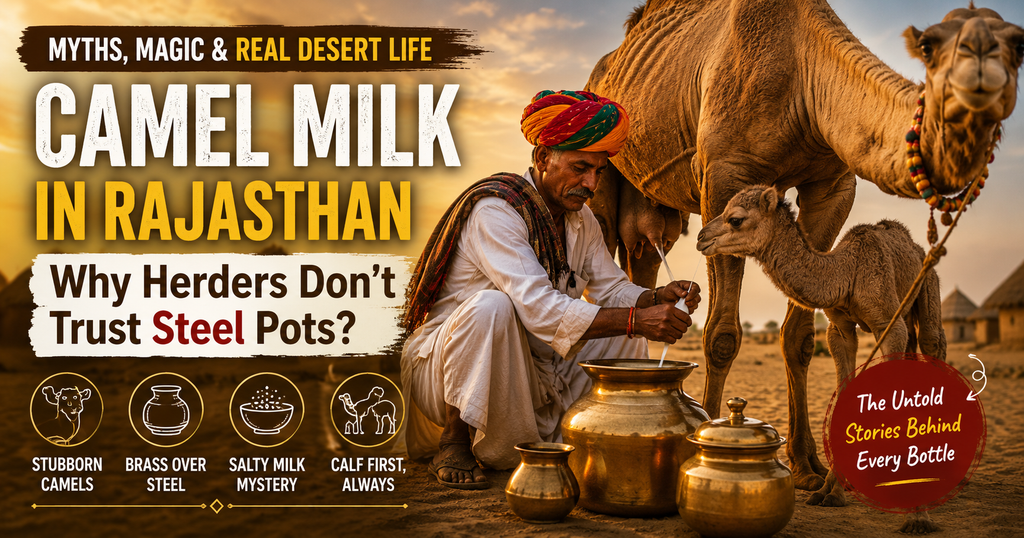
Walk into a traditional Raika home and look at their kitchen setup. You won't see the shiny stainless steel milk cans that dominate modern Indian dairies. Instead, you’ll find heavy, dented pots made of pittal (brass) or kansa (bronze) clattering around in the back of old transport jeeps.

This isn't a design choice. It’s an old food safety rule they take very seriously.

The elders swear that modern steel heats up the milk and kills its natural benefits, making it sour faster. They believe brass keeps the milk calm and sweet.

What’s funny is that modern science actually supports this old habit. Copper alloys like brass have natural antimicrobial properties. Long before anyone knew what bacteria was, the Raika figured out that storing raw milk in a heavy brass pot kept it fresh far longer when the outside temperature hit 45°C.

What Does Fresh Camel Milk Actually Taste Like?

Let’s be completely honest if you are expecting the thick, creamy, sweet taste of buffalo milk that makes a perfect cup of roadside Indian chai, your first sip of camel milk is going to shock you.

Real camel milk is light, thin, and distinctly salty.

It tastes exactly like the environment it comes from. Camels don't eat soft green grass they ignore it. Instead, they use their tough, leathery mouths to chew on thorny branches, bitter bushes, and salt-heavy desert weeds that grow deep in the arid soil.

It shouldn't taste like sugar, Bhikaram says, pouring a frothy stream into a clay cup for a curious city visitor. It tastes like the shrubs. It’s sharp. When you are walking in a hot sandstorm, regular milk makes you feel heavy and sick. Camel milk cuts your thirst immediately.

When urban tourists try it for the first time, local village kids usually gather around just to watch their faces twist up in surprise at the saltiness. One small kid even dipped his finger into the foam to show a visitor it was completely safe, giggling at the tourist's hesitation. It’s a standard piece of local entertainment.

The Desert Rule Every Herder Follows

In an industrial dairy, everything is about efficiency, yield, and liters per hour. In the Thar, the entire operation is dictated by a strict moral code The calf always gets the first turn.

Milking is done by hand, with the herder balancing a heavy brass bowl between his knees while crouching in the sand. But nothing happens until the baby camel stumbles over and starts drinking.

This isn't a performative ritual for tourists. It’s a practical negotiation. A female camel can physically hold back her milk through pure willpower if she feels anxious or unhappy. If the herder tries to push the calf away early to get more milk for himself, the mother will instantly shut down, and the milking is over.

It also leads to a lot of daily chaos. Camel calves are clumsy, heavy, and incredibly greedy. During a typical morning, it’s common to see a wobbly, 60-pound calf playfully headbutt a herder right into the dirt because it wants more. The herders don't get angry they just laugh, swap village gossip, and gently push the calf away when it's done.

The calf is our future, Bhikaram says, wiping a splash of milk from his mustache after a young calf bumped his arm, nearly spilling the morning's yield into the sand. If the season is bad and the mother is thin, we don't take anything. We leave it all for the baby. If you cheat the animal, the desert will eventually cheat you.

The Real Problem: The Isolated Desert

For hundreds of years, this system worked because it didn't need to connect with the outside world. The milk stayed in the dunes, consumed by the families who harvested it.

But as modern life caught up with Rajasthan, the Raika community hit a massive financial wall. Traditional grazing lands were cut off by new highways and developments. Suddenly, keeping a herd became expensive, but the milk itself had no value because it couldn't travel. You couldn't load fresh camel milk onto a hot local bus and send it to a city three hours away it would turn into a spoiled mess before it left the district.

Because they couldn't sell the milk, the younger men in the villages started looking at their fathers' cracked shoes and empty pockets and made a choice. They began leaving the desert behind, taking low-paying factory jobs in the polluted suburbs of Delhi or Ahmedabad. The ancient songs, the camel knowledge, and the herds were quietly fading away.

A Soft Bridge to the City

The crisis wasn't about the herding the Raika already knew how to do that perfectly. The failure was entirely about logistics. The milk was stranded in the hot sand, and the buyers were in the distant cities.

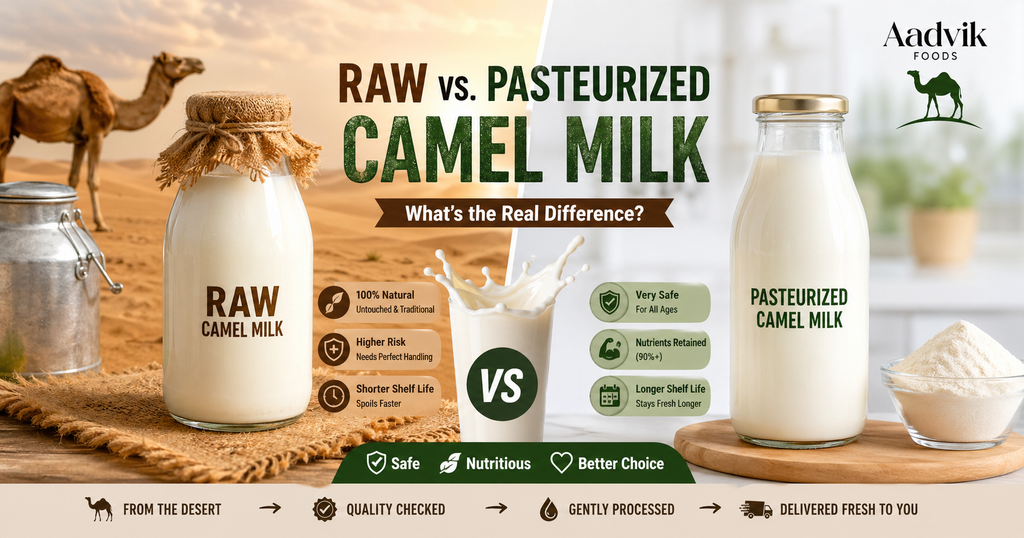
This is where the story connects with what companies like Aadvik Foods do on the ground. They didn’t come in to lecture the herders on how to manage their animals, and they didn't touch the calf-first rule. Instead, they just fixed the temperature problem.

By establishing small, local collection points and chilling centers right where the herders live, they created a simple pipeline.

Now, within a few hours of milking, the fresh milk is safely chilled, stopping the desert heat from ruining it. This simple logistical fix changed the dynamic:

  • Herders get a steady, reliable daily income for milk that used to go to waste.
  • The younger generation has a real financial reason to stay home and keep their family traditions alive.
  • The camels stay out in the open, eating the wild, thorny plants that give the milk its unique properties.

The goal isn't to industrialize the desert it's to give this lifestyle enough economic support to survive the modern world.

What’s Inside Your Glass

The next time you see a bottle of camel milk, try to picture the actual scene behind it.

Think of the heavy brass pots keeping the liquid cool under a hot sun, and the playful calf headbutting a herder into the sand. Every single bottle isn't just a healthy dairy alternative. It is a direct link to a noisy, dusty piece of Rajasthan culture that managed to stick around.

And somewhere out in the dunes near Pali, Lakshmi the camel is probably still staring down Bhikaram, waiting for her morning greeting, ready to kick over the bowl if he forgets.

What about you? Have you ever tasted real camel milk, or did the natural salty flavor surprise you? Let’s chat about it in the comments below!

Frequently Asked Questions

Why does camel milk taste salty?

Camel milk tastes slightly salty because camels survive on thorny desert shrubs, dry bushes, and mineral-rich plants that grow in arid soil. Unlike buffalo or cow milk, the flavor feels lighter, sharper, and more refreshing, especially in hot desert weather.

Why do Rajasthan herders store camel milk in brass pots?

Many traditional herders believe brass keeps camel milk cooler and fresher for longer than steel containers. Long before refrigeration existed, brass and kansa vessels were commonly used because they naturally slowed spoilage in extreme desert heat.

Why doesn’t camel milk curdle easily?

Camel milk behaves differently from cow milk because of its unique protein structure and lower fat composition. In desert conditions, people noticed it stayed liquid much longer, which is why many old travelers considered it a “survival drink” during long journeys.

What does fresh camel milk actually taste like?

Fresh camel milk is usually light, slightly salty, and less creamy than buffalo milk. Many first-time visitors are surprised by the flavor because it reflects the desert plants camels feed on every day.

Related Articles

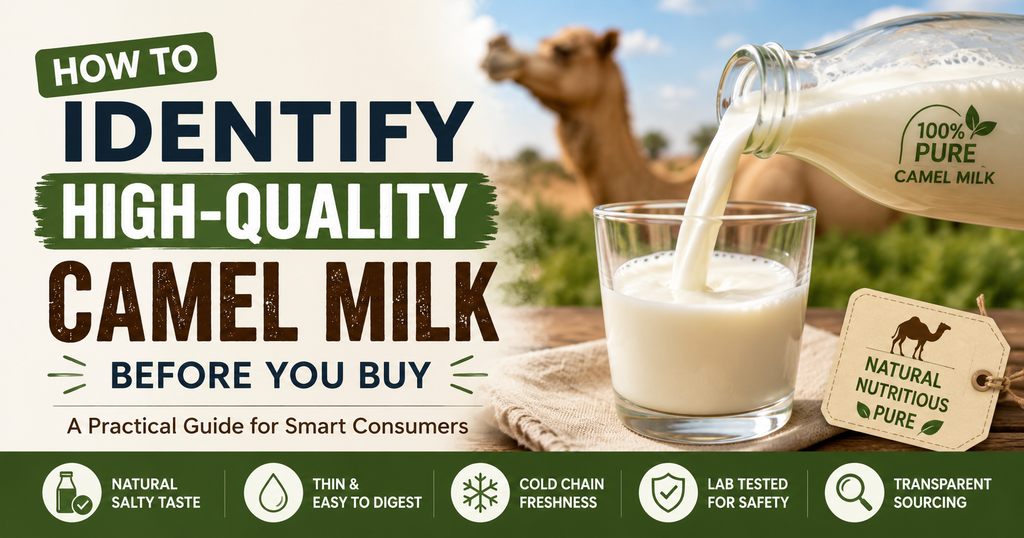
How to Identify High-Quality Camel Milk Before You Buy
How to Identify High-Quality Camel Milk Before You...
Why Is Camel Milk in Rajasthan Stored in Brass Instead of Steel?
Myths, Magic & Real Desert Life: Why Rajasthan’s...
Raw vs Pasteurized Camel Milk: Safety, Taste and Key Differences
Raw vs. Pasteurized Camel Milk: What Really Happens...
Is Goat Milk Safe for Babies? What Parents Must Know
Is Goat Milk Safe for Babies? Here's What...
How Every Bite Shapes Your Gut Health and Microbiome
How Every Bite Shapes Gut Health: What Your...
How Your Kitchen Supports Immune Health During Winter
How Your Kitchen Supports Immune Health During Winter...
Sale Off
Camel_Milk_Powder
₹ 1,349.00₹ 999.00
Sale Off
Camel milk powder sachets
₹ 1,449.00₹ 1,423.00